


Channeling St. Patrick

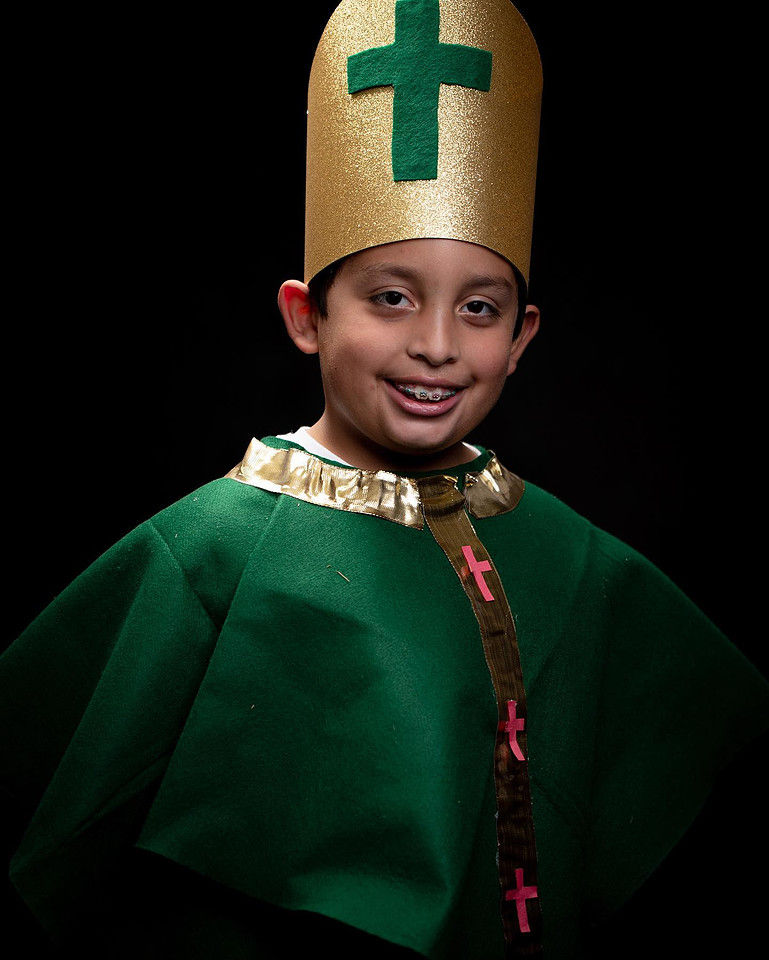

“Train the young in the way they should go; even when old they will not swerve from it,” (Proverbs 22:6) is a well-known passage from the Wisdom Books in the Old Testament that offer insight and advice. This particular verse emphasizes the role of parents in guiding the formation of their children. While this specific passage relates primarily to moral formation, as parents, we also are responsible to ensure our children are grounded academically, physically, and spiritually. To that end, we strive to introduce our children to a wide-variety of opportunities to ensure their success: sports, STEM, music, theater, art, and dance, for example. We believe that each of these disciplines are crucial in stimulating neurons and building muscles and skill.
From a very early age, children are maneuvering schedules that are “guaranteed” to give them an advantage. While these efforts are likely valuable, parents and grandparents should not disregard the social, emotional, and spiritual learning that once was foundational but today is often overlooked. In recent years, schools have adopted curricula to address what is now known as Social Emotional Learning (SEL) to fill in these missing gaps. It is important that children learn “soft skills” from a very early age and they must hear these messages from everyone in their support system. These include:
Recognizing emotions and controlling impulses
Empathizing with others and understanding diverse perspectives
Communicating clearly and engaging in conflict resolution
Making wise and safe choices
Children who are academically, physically, and/or musically proficient but lack the ability to recognize and manage threats (bullying, mistreatment, manipulation, peer-pressure) may find themselves in dangerous situations resulting in negative long-term effects. By practicing role-playing on a regular basis, your child will have a variety of responses in their tool chest ready to draw on in an instant. These scenarios include:
What are some things you might say or do when you are sad or angry?
How should you respond if someone asks you to do something you know is wrong?
If someone accuses you of something you did not do, how might you respond?
If someone is being unkind to another student, what is something you could do to help?
When someone has a different opinion or idea, what are some ways to compromise?
As always, it is helpful to look to the saints as role models for us. St. Patrick’s Day is tomorrow and we all celebrate the Irish on this great feast day. St. Patrick, as we know, is the patron saint of Ireland and one of the most beloved and well-known of all the saints in history. However, early in life he experienced great hardship. He was captured by Irish pirates and sold into slavery, where he tended sheep for six years. He escaped and returned home to England, where he eventually studied and entered the priesthood. He eventually returned to Ireland and introduced the non-believers to Christianity. According to legend, St. Patrick drove the snakes from the country and taught the mystery of the Holy Trinity with a three-leaved shamrock. St. Patrick certainly relied on his skills of knowledge and faith, but he was able to persevere through times of immense trials as he pursued God’s plan for his life.
So tomorrow, when we all don our green attire and perhaps partake in a sip of Guinness or Jameson, let us also ask St. Patrick to guide and strengthen us on our journey toward greatness.
Deo Gratias, Kathy


